Some kitchen tools earn their keep quietly for a decade and then get replaced. The Rosti Margrethe Bowl has done the opposite: it has been sitting on Scandinavian benchtops since 1954, has sold more than 25 million units worldwide, and now lives in the permanent design collection of New York’s Museum of Modern Art. For a plastic mixing bowl, that is an unusually long résumé — and it is one worth understanding before dismissing it as just another kitchen basic.
A quick history of the Rosti Margrethe Bowl
The bowl was designed in 1954 by Copenhagen industrial designers Acton Bjørn and Sigvard Bernadotte, working for the Danish manufacturer Rosti. That same year, a change to Danish succession law meant Princess Margrethe — later Queen Margrethe II — would one day inherit the throne in her own right, and the design was named in her honour. It launched in three sizes, in white and a handful of pastel shades, with a brief that sounds simple but is genuinely hard to nail: a bowl “spacious and yet high enough to allow whipping and stirring without the contents spilling over.” Seven decades later, that original engineering problem is still the reason the shape hasn’t needed to change.
Built for the job, not just the shelf
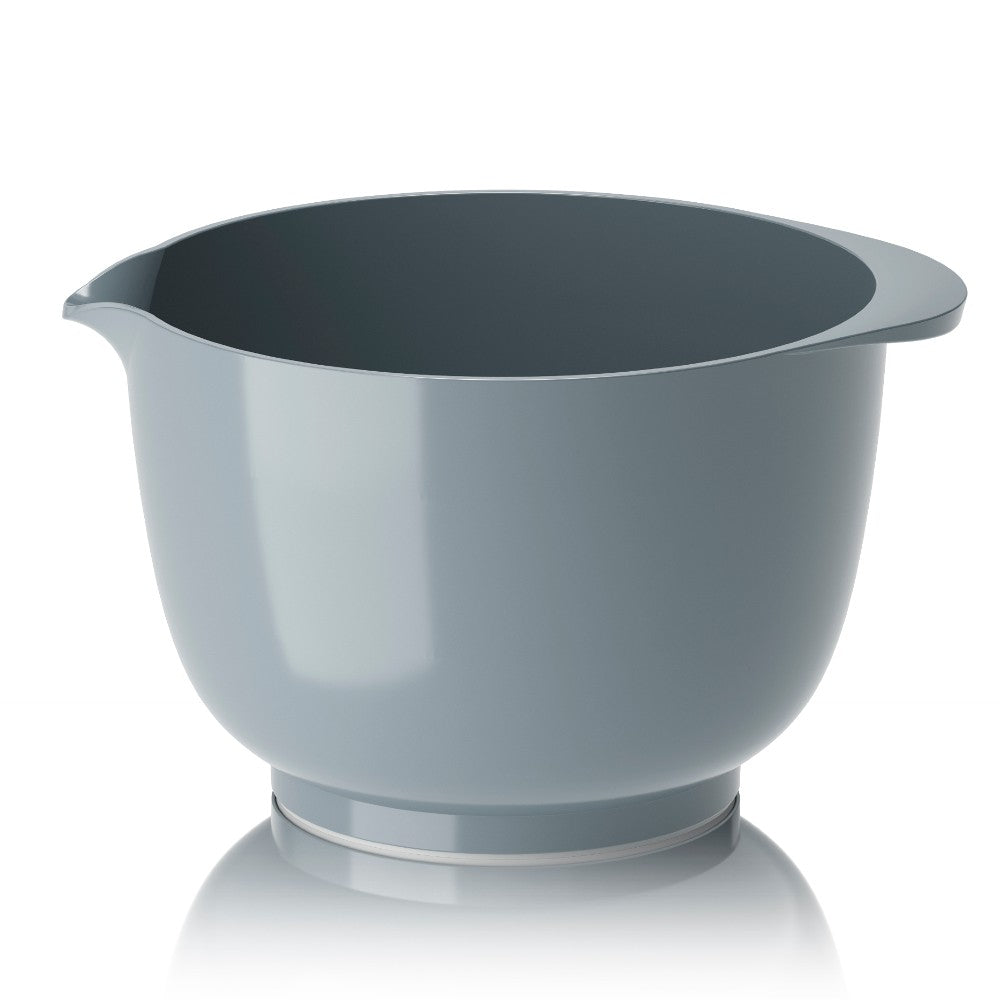
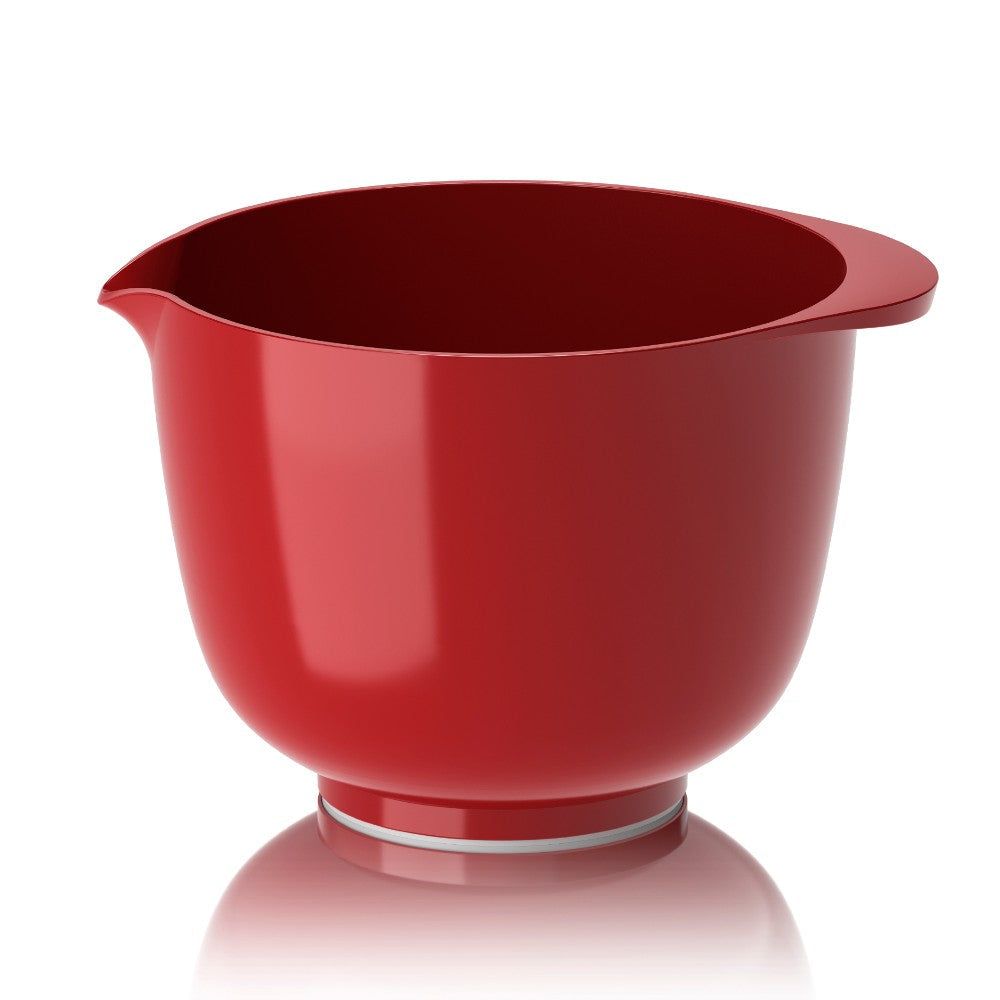
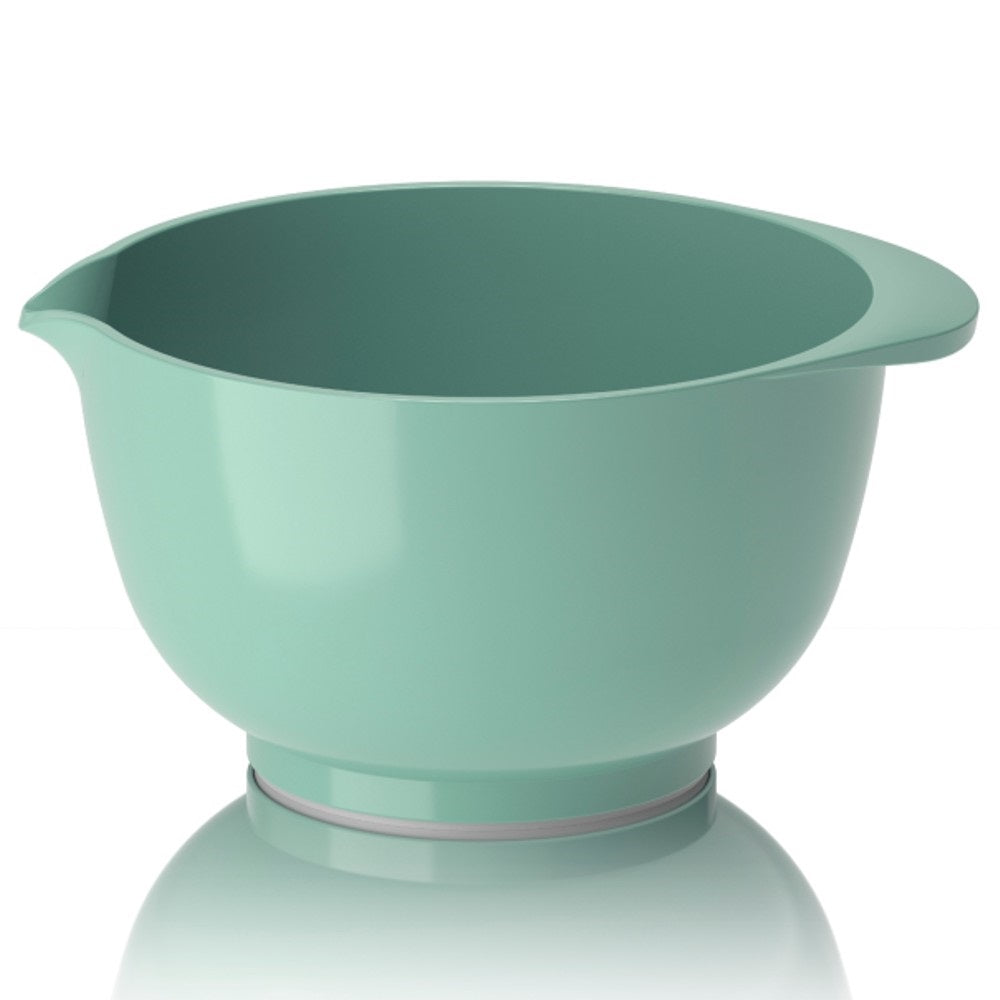
Strip away the design-history trivia and the Rosti Margrethe Bowl is still, first and foremost, a tool that does its one job well. The wide pouring spout is angled so batter comes out in a controlled stream rather than a mess down the side of the bowl. The moulded handle sits at an angle that keeps knuckles clear of the rim during vigorous whisking. A non-slip rubber ring on the base stops the bowl skating across the bench one-handed while the other hand is holding a whisk or an electric mixer. None of it looks clever until you’ve used a cheaper bowl without those details and realised what you were missing.
A colour palette that keeps growing
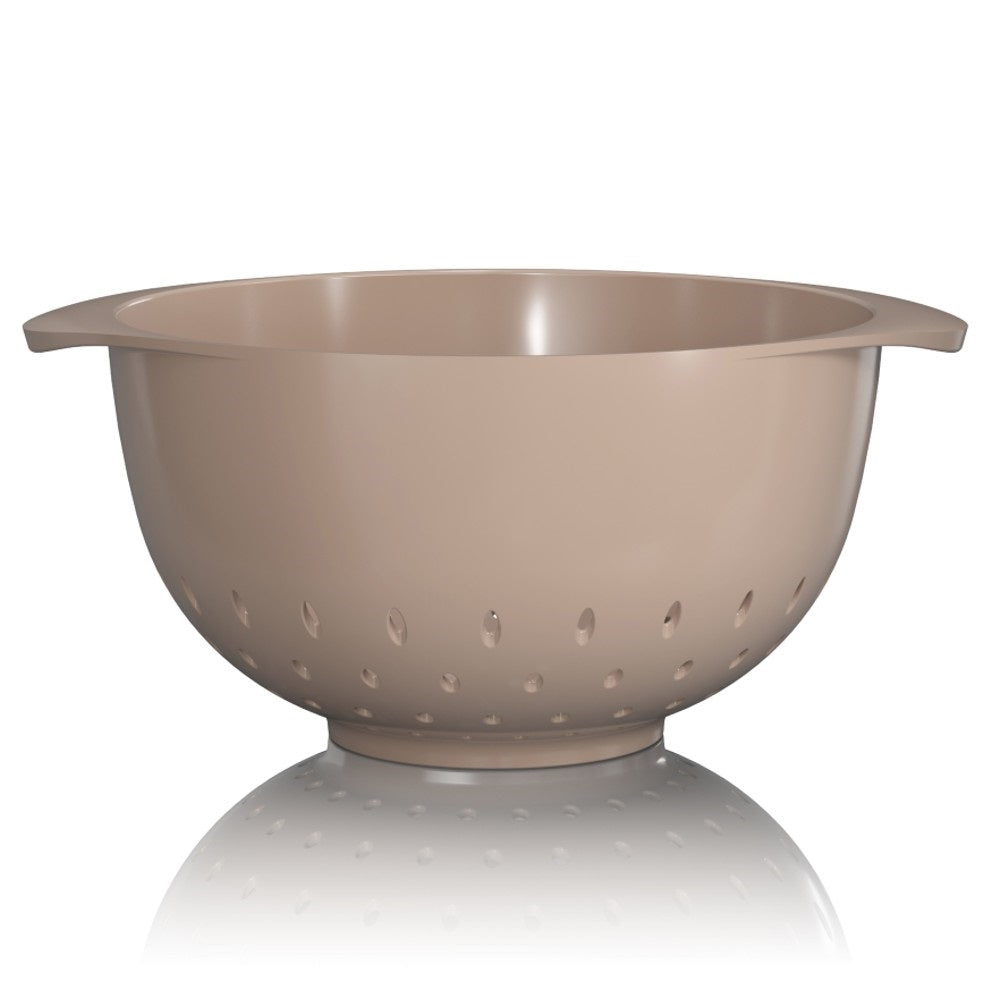
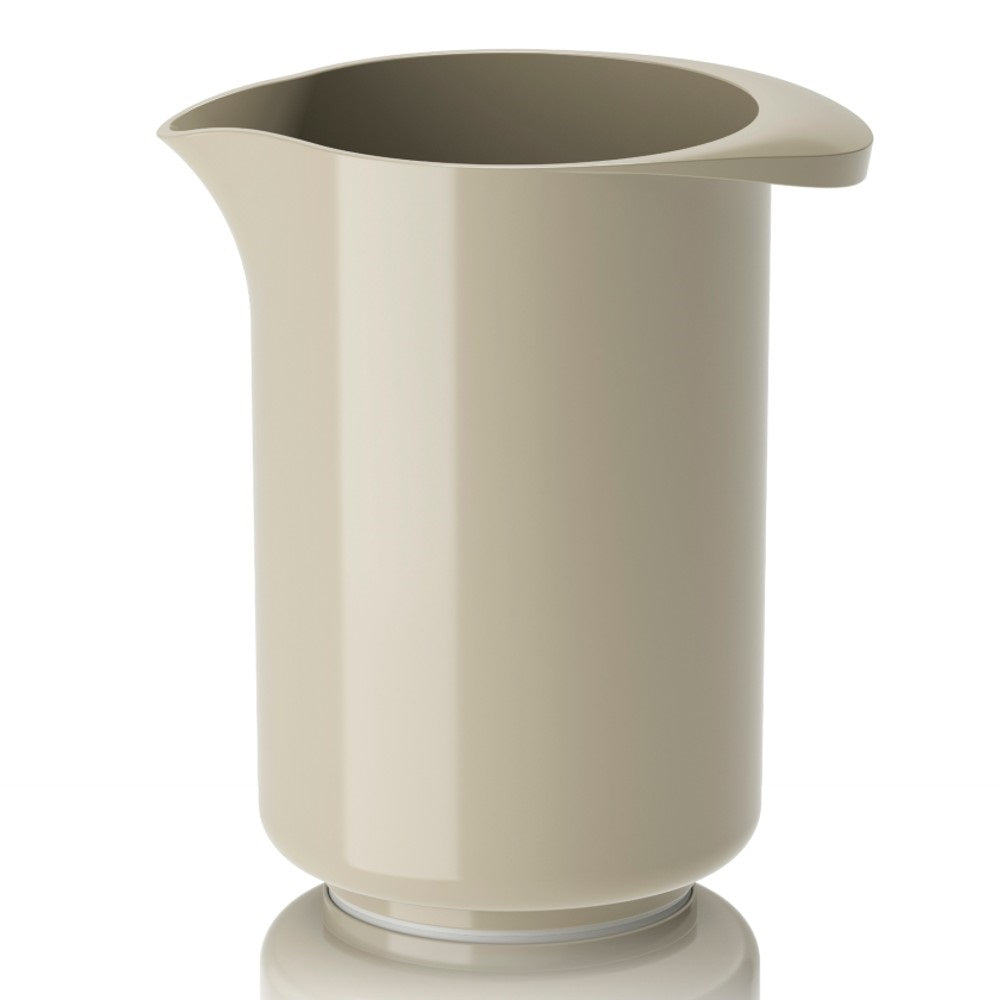
The Margrethe range has expanded well beyond the original three sizes. It now runs from a 0.5 litre bowl suited to a single portion of pancake batter up to sizes built for bread dough and party-scale baking, in a rotating seasonal palette that currently includes Nordic Green, Dusty Blue, Curry, Humus and classic black, red and white. Rosti has extended the same shape language into a matching colander, a stirring spoon, and a classic mixing jug, so the whole prep station can be colour-matched without much effort.
Why it ended up in MoMA
Design objects rarely survive this long without being replaced by something cheaper and flashier. The Margrethe bowl’s staying power comes down to a combination of things: it is made from melamine, a hard-wearing plastic that resists staining, cracking and heat far better than the average mixing bowl; it has never needed a design refresh because the original proportions still work; and it has become genuinely useful shorthand for good Scandinavian design, to the point Denmark issued a postage stamp featuring it. That’s a rare trajectory for an affordable kitchen bowl — from newlywed wedding-registry staple to a piece MoMA now displays as an example of mid-century Danish design done right.
Who the Rosti Margrethe Bowl is best for
- Home bakers who want one bowl that can go from whisking eggs to proofing bread dough without swapping sizes
- Anyone setting up a first kitchen who’d rather buy one well-made bowl than three flimsy ones
- Gift buyers looking for a housewarming or wedding present with real design credentials behind it
- Minimalist kitchens, since the colour range means one bowl can double as bench-top storage that looks intentional
- Collectors of Danish mid-century design who want something from MoMA’s collection they can actually use daily
Where to buy the Rosti Margrethe Bowl in Australia
The full current range of Margrethe bowls, colanders, jugs and matching accessories, across the latest seasonal colourways, is available through BEON, along with the rest of Rosti’s Danish kitchenware line-up.