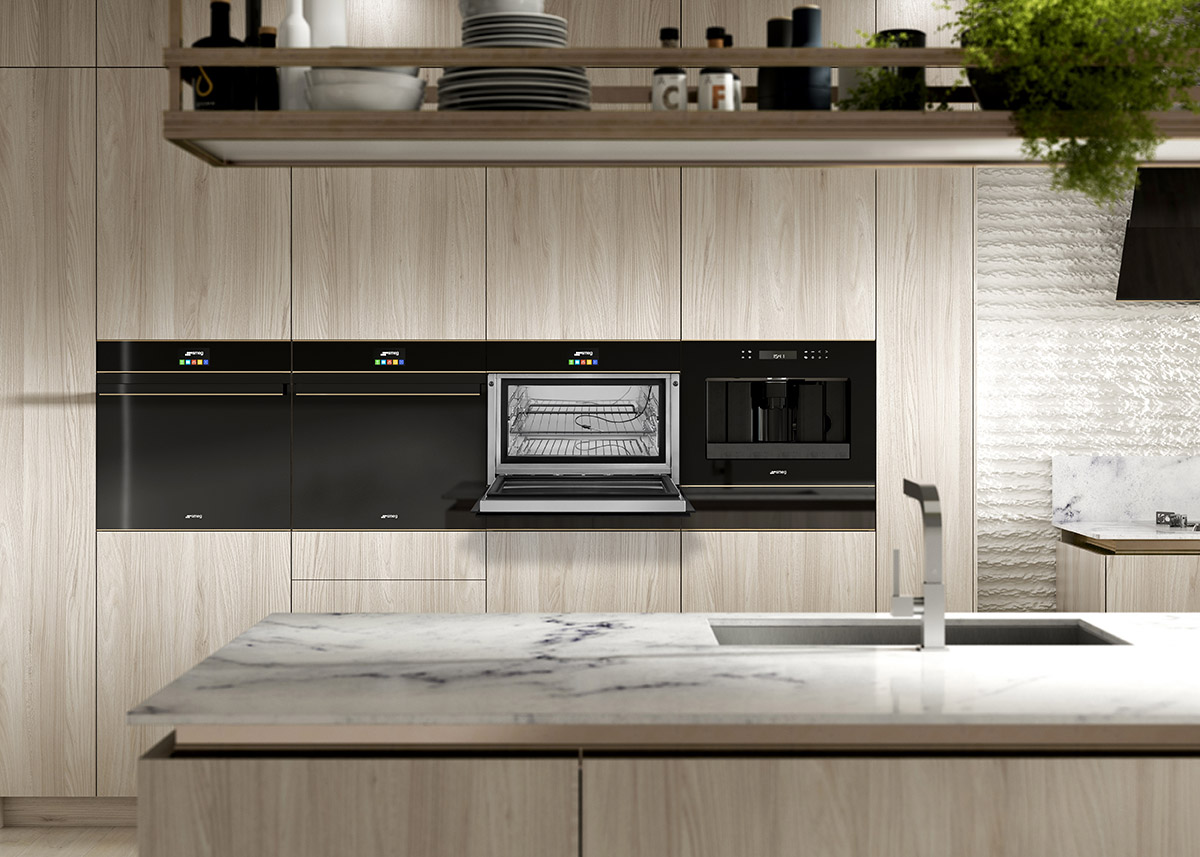
Open ten cupboards in any renovated kitchen and the drawers are usually where the real engineering hides. A good set of kitchen drawer systems is the difference between a drawer that glides shut on its own and one that rattles, sags or slams shut on your fingers. It is one of the least glamorous line items on a kitchen budget, and one of the most noticed once it is done — either because it works beautifully every single day, or because it doesn’t.
What is a kitchen drawer system?
A drawer system is the hardware that turns a timber or laminate box into a functioning drawer: the runners it slides on, the mechanism that controls how it opens and closes, and — in more integrated designs — the drawer box itself. At the simple end, that might mean a pair of ball-bearing runners bolted to a shopfitted box. At the premium end, it means a fully engineered steel drawer with soft-close built into the runner, a design language that matches the rest of the kitchen, and load ratings tested to take years of cutlery, pots and pantry goods without sagging. Because drawers get opened dozens of times a day, the system behind them affects how the whole kitchen feels to live with, not just how it looks on install day.
Soft-close and push-to-open technology
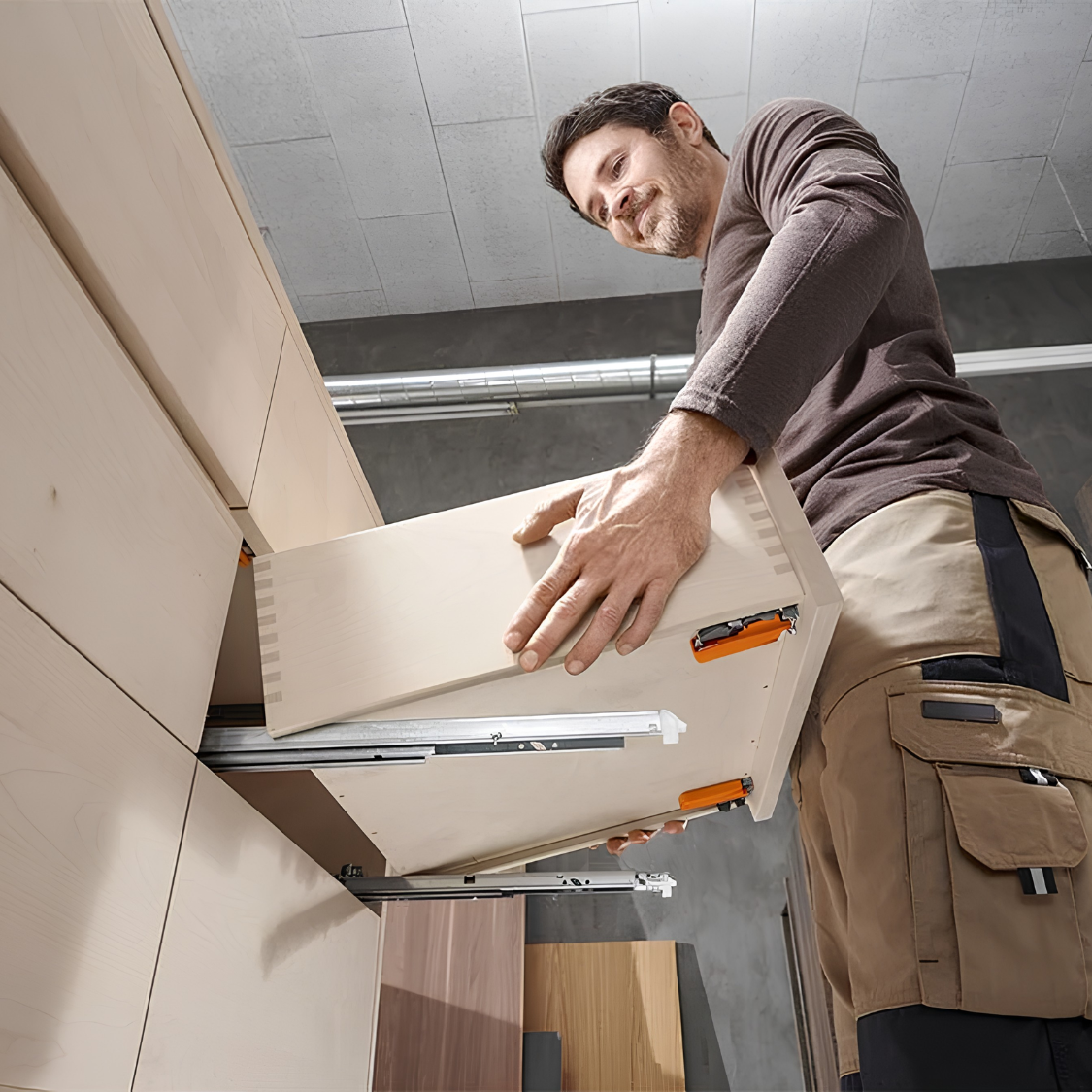
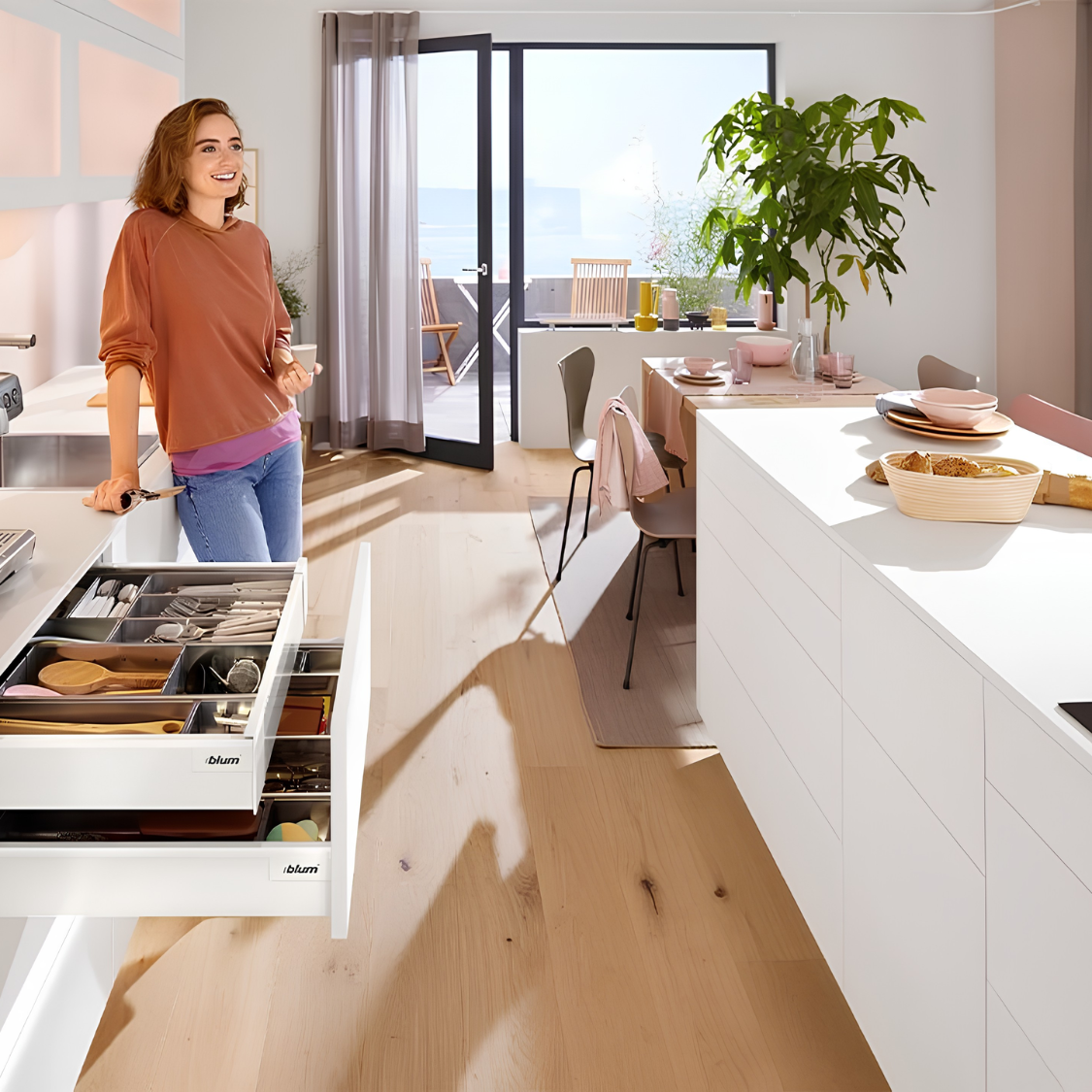
Soft-close is now close to a baseline expectation rather than an upgrade. The mechanism uses a small hydraulic or pneumatic damper inside the runner that catches the drawer in the last few centimetres of travel and eases it shut, no matter how hard it’s pushed. Different manufacturers brand this differently — you’ll see it marketed as an integrated damping system in the runner itself, working invisibly whether the drawer is loaded with cutlery or a stack of dinner plates. Push-to-open hardware takes the idea a step further, letting a drawer front open with a light tap rather than a handle, which is popular on handleless kitchen designs. Full-extension, ball-bearing runners are the other piece worth understanding: they let the drawer pull all the way out of the cabinet rather than stopping two-thirds of the way, which matters enormously for deep drawers or corner cabinetry where reach is already limited.
Load capacity and finish options
Not every drawer carries the same load, and drawer systems are rated accordingly — typically in bands around 30kg, 50kg and 65kg. A shallow cutlery drawer rarely needs the heaviest-duty runner, but a deep pot-and-pan drawer or a pull-out pantry absolutely does; undersizing the load rating here is one of the more common — and expensive — mistakes in a kitchen build, since a sagging or binding drawer usually means pulling the whole cabinet apart to fix it. Finish matters just as much for the overall look. Drawer systems are typically available in a run of neutral tones — white, silver, anthracite, and a range of warm and cool greys — so the visible drawer sides can be matched (or deliberately contrasted) with cabinetry, benchtops and handles.
Comparing the major drawer system brands
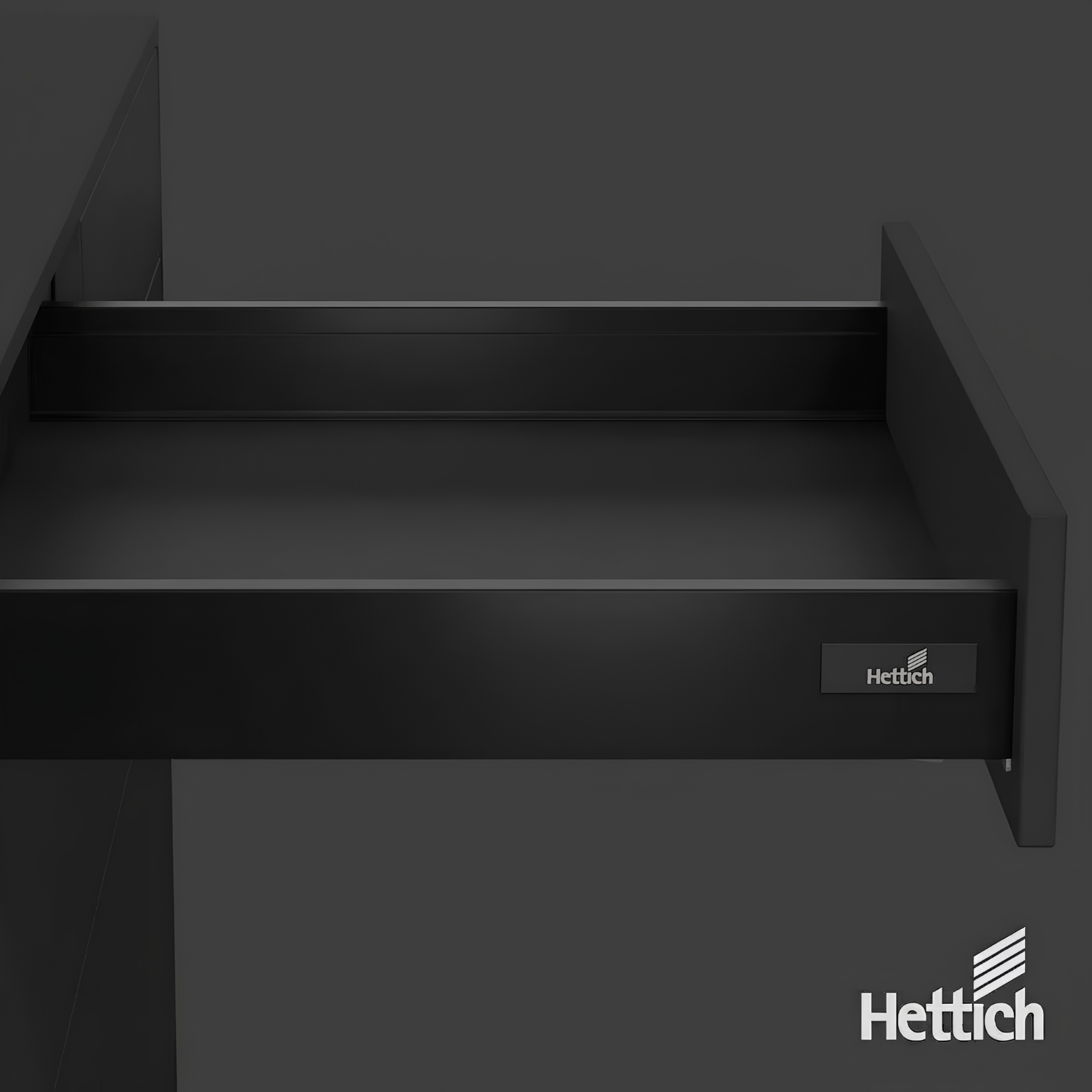
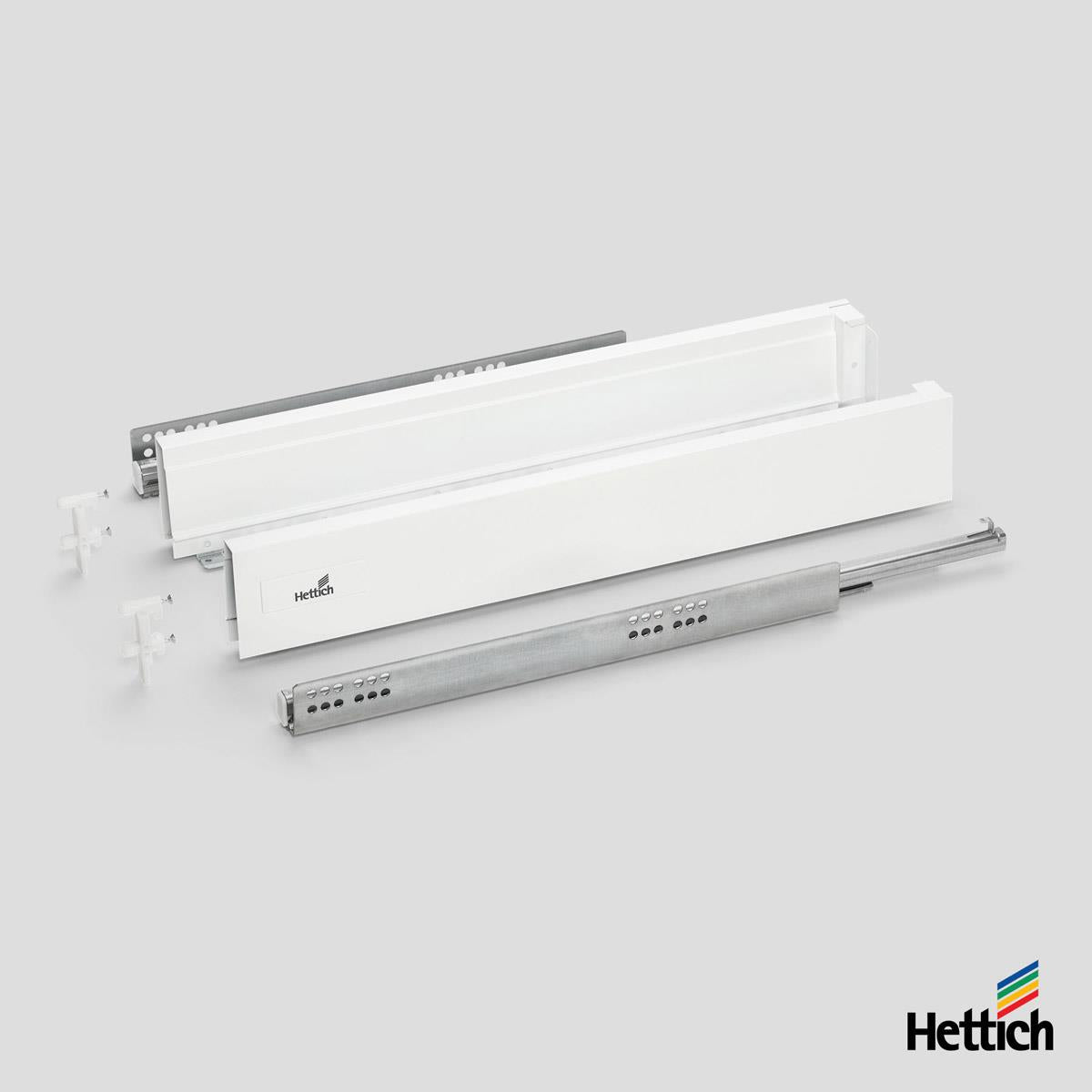
Two European manufacturers dominate the premium end of the Australian market, and they take slightly different approaches. Blum’s range is the broadest, spanning everything from entry-level TANDEM and MOVENTO runners through to fully integrated drawer box systems like LEGRABOX, MERIVOBOX and TANDEMBOX, each with its own take on drawer height, side-panel design and BLUMOTION soft-close. Hettich’s Atira range takes a more streamlined approach — a single, well-specified drawer platform offered in 30kg and 50kg capacities, with its own “Silent System” soft-close runners, plus add-on internal drawer sets and TopSide kits for building out storage inside a deeper drawer. Neither is objectively “better” across the board; the right choice usually comes down to which system suits the drawer heights and finishes already specified for the kitchen, and what a cabinet maker is set up to install.
What to look for in a drawer system
- Load capacity — match the runner’s rated weight to what the drawer will actually carry, not just its size.
- Soft-close cycle rating — a properly engineered damper should be rated for tens of thousands of open-close cycles.
- Finish match — check the drawer side colour against cabinetry and handles before ordering, not after.
- Full-extension access — essential for deep drawers, corner units and anything stored right at the back.
- Organisational inserts — internal drawer sets, dividers and add-on kits that make the space genuinely usable, not just tidy on install day.
Where to buy kitchen drawer systems in Australia
For renovators and cabinet makers sourcing hardware directly, KitchenLibrary’s drawer systems range covers the full spread outlined above — from Blum’s LEGRABOX, MERIVOBOX and TANDEMBOX lines (including the wider Blum collection) through to Hettich’s Atira drawer sets, shipped nationwide from Melbourne. Whether you’re speccing a single kitchen or ordering hardware across a full renovation, it’s worth comparing load ratings and finishes side by side before committing to a system.