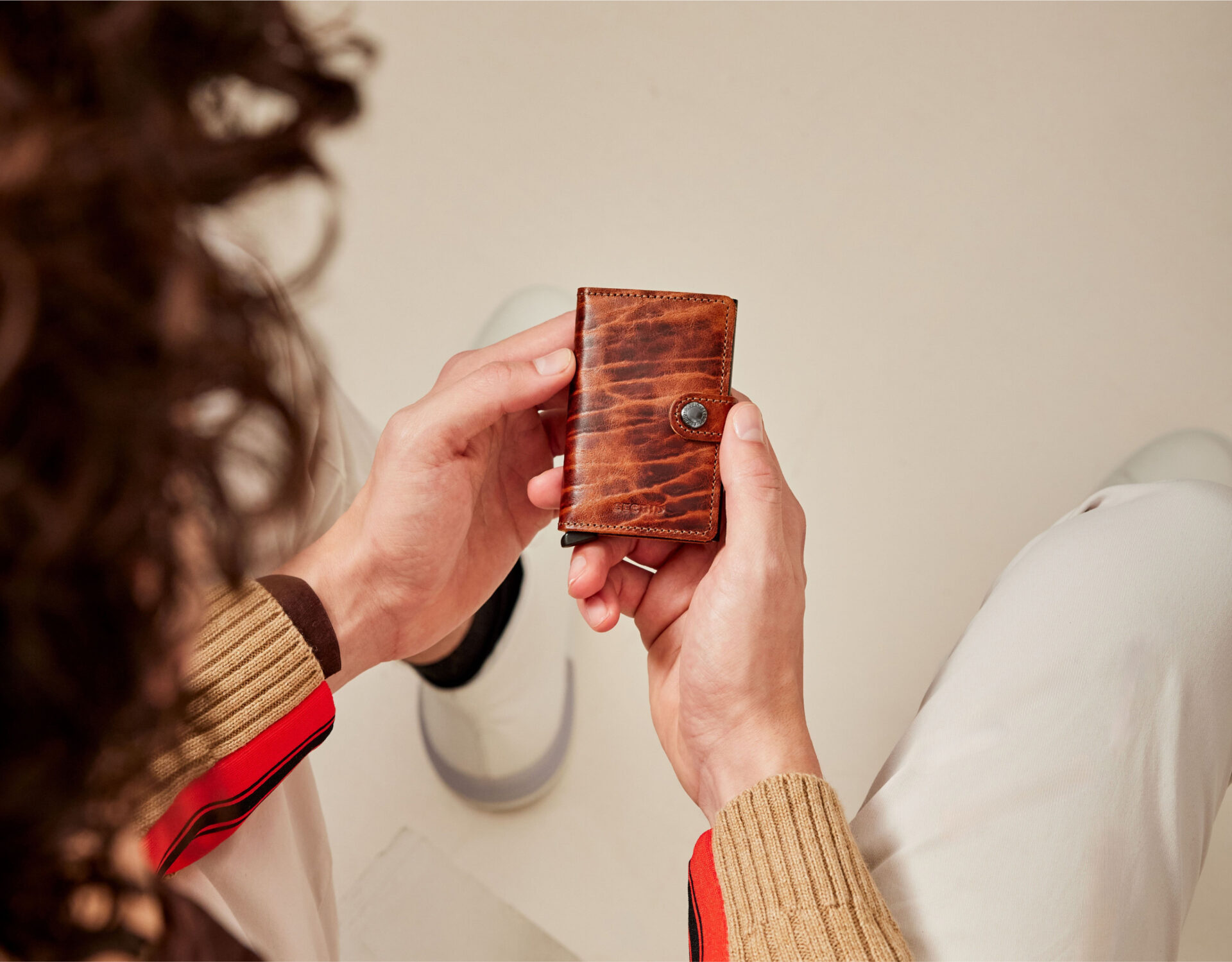
Most wallets are just leather folded into pockets. The Secrid Miniwallet is built around a small aluminium mechanism first, and leather second — a design decision that turned a Dutch couple’s home-assembled side project into one of Europe’s most copied wallet formats. Slide a thumb across the side and every card fans out ready to use, no digging, no bent corners, no wallet that bulges after a year of use.
A quick history of the Secrid Miniwallet
Secrid was founded in the Netherlands in 1995 by industrial designer René van Geer and fashion designer Marianne van Sasse van Ysselt. Their first product wasn’t a wallet at all — it was the Bodycard, a simple plastic holder designed to stop bank cards from bending and breaking in a back pocket. That protective instinct became the company’s whole identity in 2009, when the pair introduced the Cardprotector: a sliding aluminium mechanism reportedly inspired by the clean mechanics of an iPhone. The first 13,000 units were hand-assembled in the founders’ own home before demand outgrew the kitchen table. Wrapped in a leather wallet body, the Cardprotector became the Miniwallet, and it has stayed close to Secrid’s most popular product ever since — compact enough to disappear into a front pocket, but built to carry far more than its size suggests.
How the Cardprotector actually works
Inside every Miniwallet is the same patented Cardprotector: two aluminium plates that hold four embossed cards, or six flat cards, in a stacked fan. A lever on the side triggers a spring mechanism that slides the entire stack out in one motion, presenting every card at a slightly staggered angle so you can simply pull out the one you need. The aluminium body does double duty — it keeps cards from bending or snapping under pressure, and it blocks the RFID and NFC signals that contactless skimmers rely on, without needing a separate “blocking sleeve” or liner.
Leather made two ways, in two countries
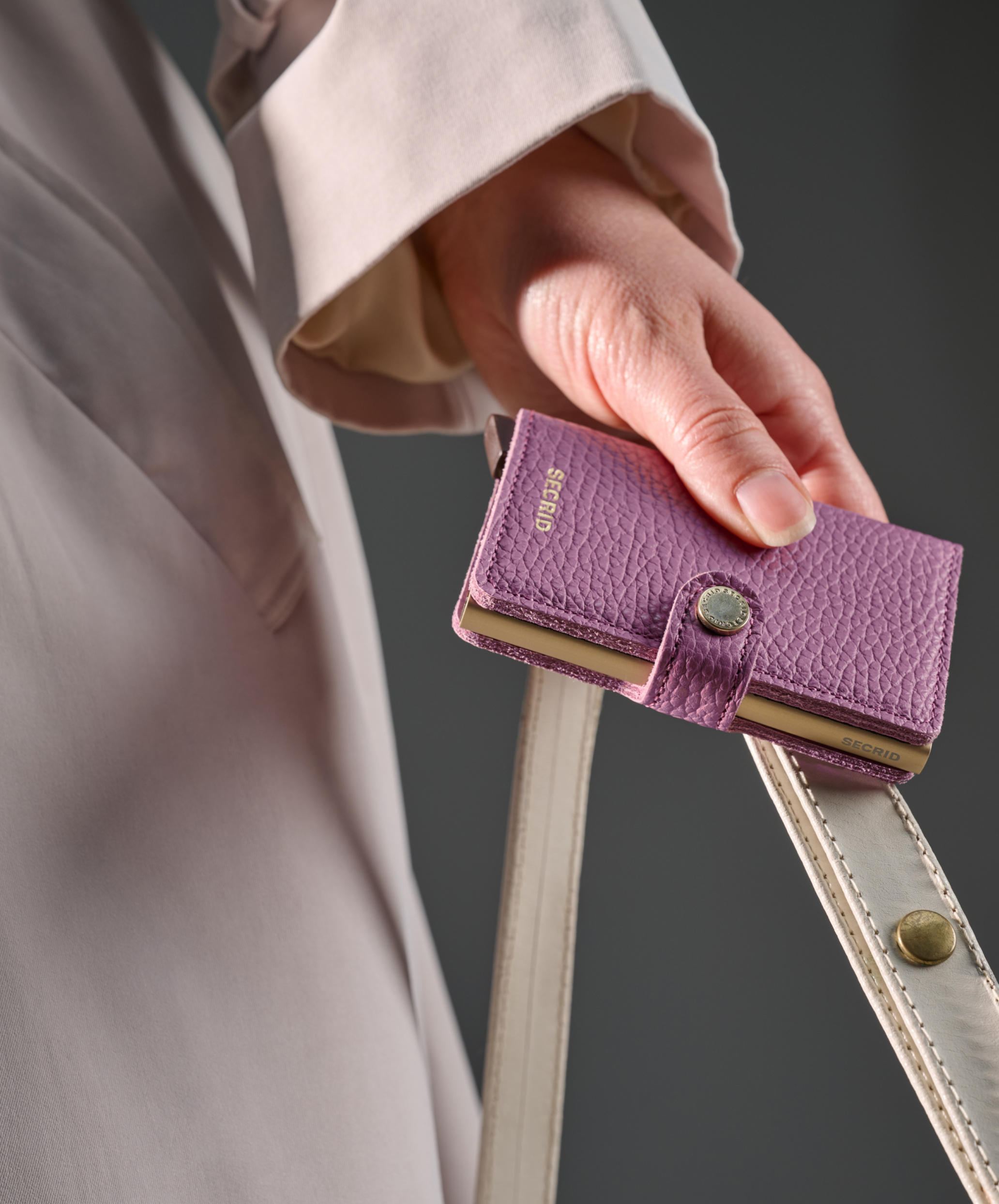
The Cardprotector is only half the story — the leather wrapped around it is where Secrid lets its range breathe. The Miniwallet body holds four extra cards, banknotes, receipts and business cards behind the aluminium unit, and it comes in dozens of finishes, from the exclusive Dutch Martin leather developed specifically for Secrid with hard carnauba wax for a deep, scratch-resistant gloss, to pebble-grain and diamond-embossed leathers finished in Italy. Every wallet is assembled in the Netherlands and Italy, much of it through sheltered workshops employing around 150 people — a manufacturing detail Secrid has kept consistent since the Cardprotector’s earliest days, rather than moving assembly offshore as the brand scaled internationally.
Why people switch to a Secrid Miniwallet
- No more bent cards. The aluminium plates keep chip cards flat and readable, even after years in a back pocket.
- Built-in RFID protection. No sleeve or liner required — the mechanism itself blocks skimming attempts.
- Genuinely compact. At 10.3cm x 6.2cm x 2cm, it is roughly a third the bulk of a traditional bifold once loaded with the same number of cards.
- One-motion access. The sliding fan means you’re never fumbling through slots at a checkout counter.
Where to buy the Secrid Miniwallet in Australia
The Secrid Miniwallet is available in Australia through BEON, with pricing from around $135 AUD depending on leather and finish — including the Dutch Martin, Pebble and Emboss Diamond styles shown above. Shop the Secrid Miniwallet Dutch Martin directly, or search BEON for the full range of Secrid Miniwallet, Slimwallet and Twinwallet styles and leathers.