
Most tabletop radios from the year 2000 are long gone. The Tivoli Audio Model One is still in production, largely unchanged, because it was engineered by a man who had already spent forty years figuring out how to make radios sound better than they had any right to. It remains one of the rare pieces of consumer electronics where “handmade wood cabinet” isn’t marketing language — the tuner inside is doing real, old-fashioned engineering work most modern radios never bother with.
A quick history of Tivoli Audio and the Model One
Tivoli Audio was founded in Massachusetts in 2000 by audio engineer Henry Kloss and entrepreneur Tom DeVesto. Kloss was not a newcomer — he had already co-founded KLH and Advent, two hi-fi companies known for making genuinely good sound accessible, and by the time he and DeVesto launched Tivoli, he had decades of experience solving one very specific, unglamorous problem: getting a small radio to pull in a clear signal in a crowded city, or from a weak, distant station, without a mess of static. The Model One was Tivoli’s first product and effectively a distillation of that expertise into a single, deliberately simple table radio. Kloss passed away in 2002, only two years after the company launched, but Tivoli kept building on his design rather than replacing it — by 2006 the Model One was distributed in more than 30 countries, Bluetooth capability was added in 2012, and a digital variant arrived in 2017. The radio has since found its way into Ritz-Carlton, Marriott and Ace Hotel rooms, and even had a limited-edition run with Supreme in 2018.
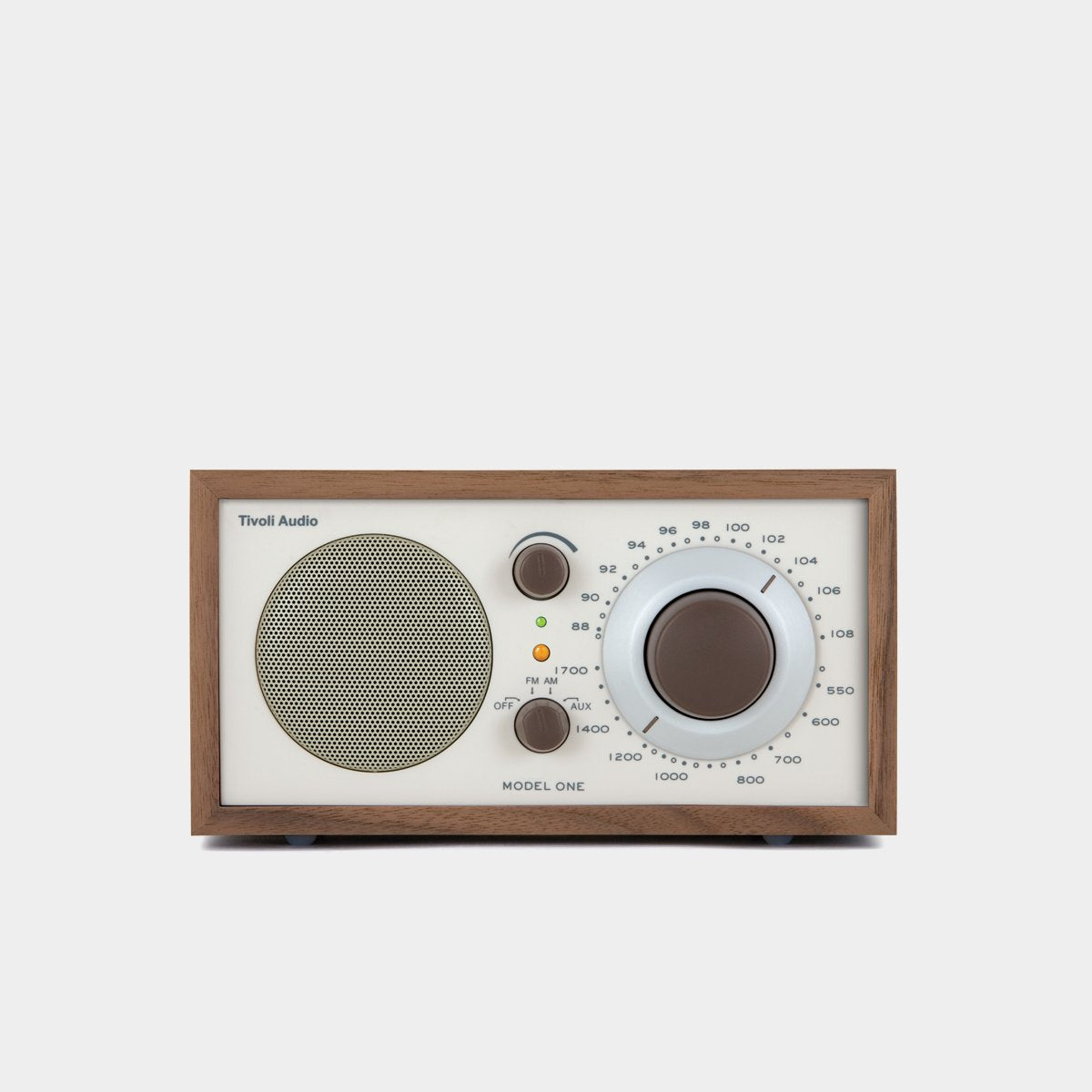
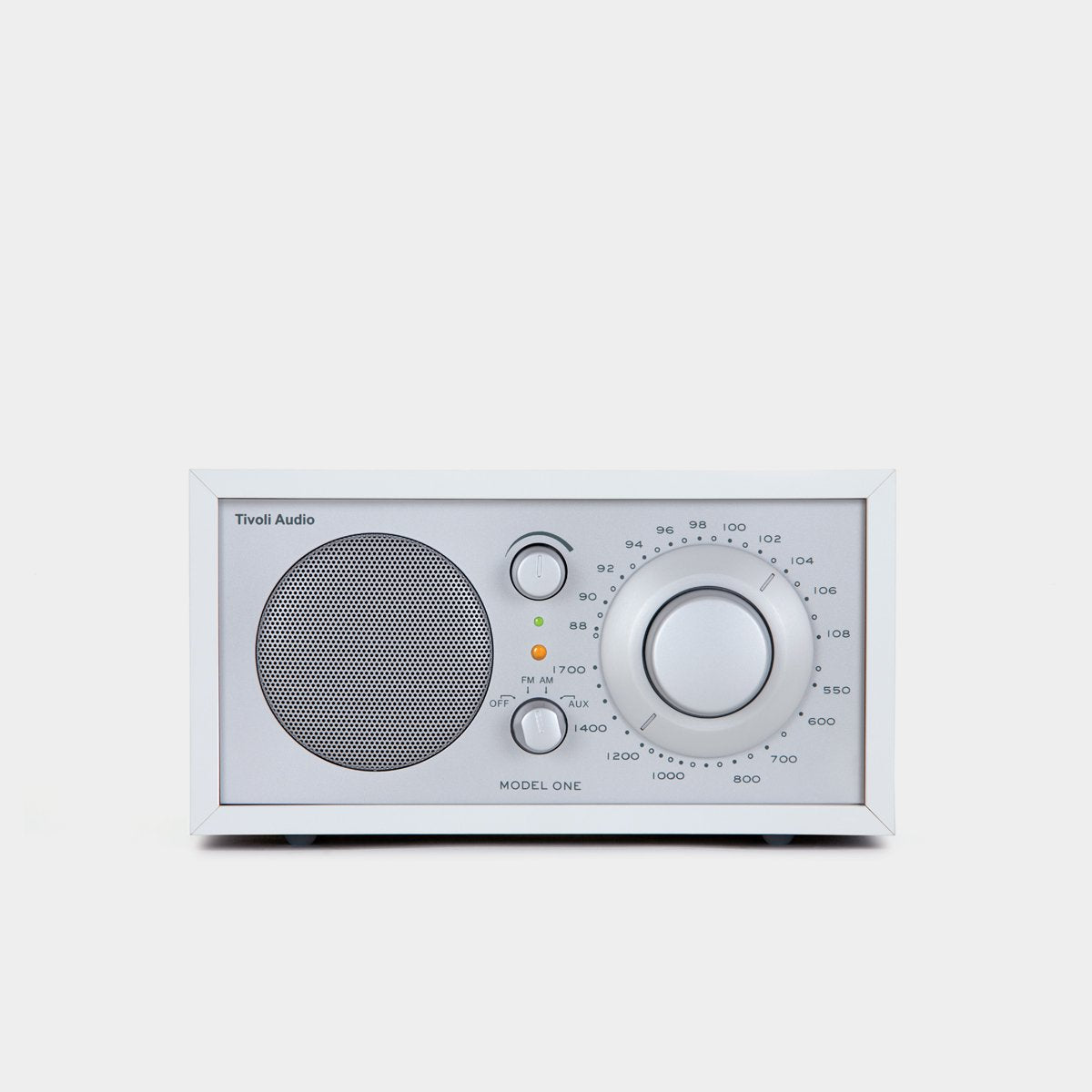
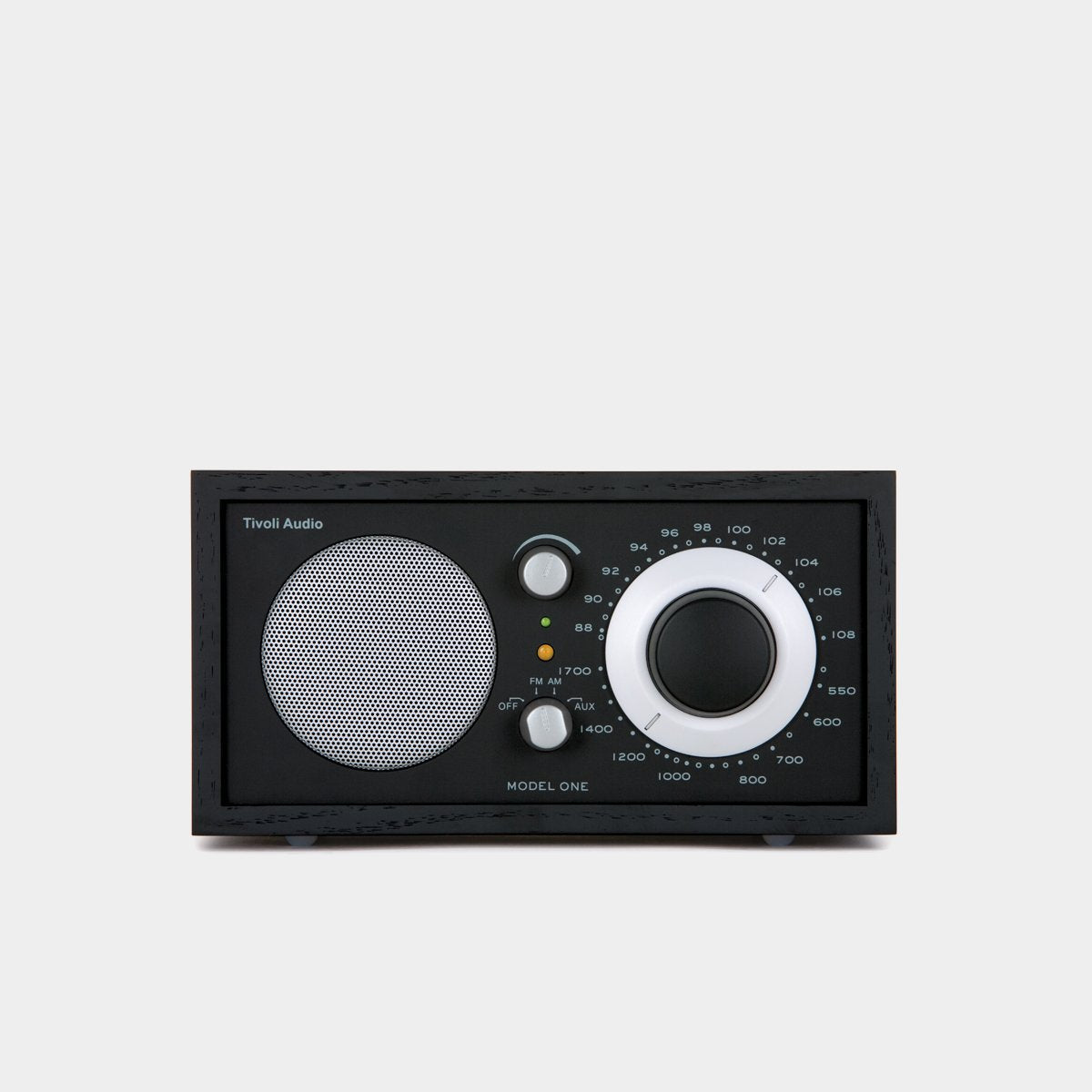
Henry Kloss’s radio engineering, in a handmade cabinet
The Model One’s party trick is its tuner, not its looks. Kloss designed it specifically to receive FM signals cleanly in the kind of congested urban environments and weak-signal fringe areas where cheaper radios — particularly the mass-produced Japanese sets of the 1960s and 70s that Kloss had spent his career competing against — tended to fall apart into hiss and drift. That engineering sits inside a solid, handmade wood cabinet rather than moulded plastic, which does more than look warm on a shelf: timber cabinets naturally damp resonance better than plastic, which is part of why the Model One’s single full-range speaker still sounds fuller than its modest size suggests.
Twenty-five years, one shape
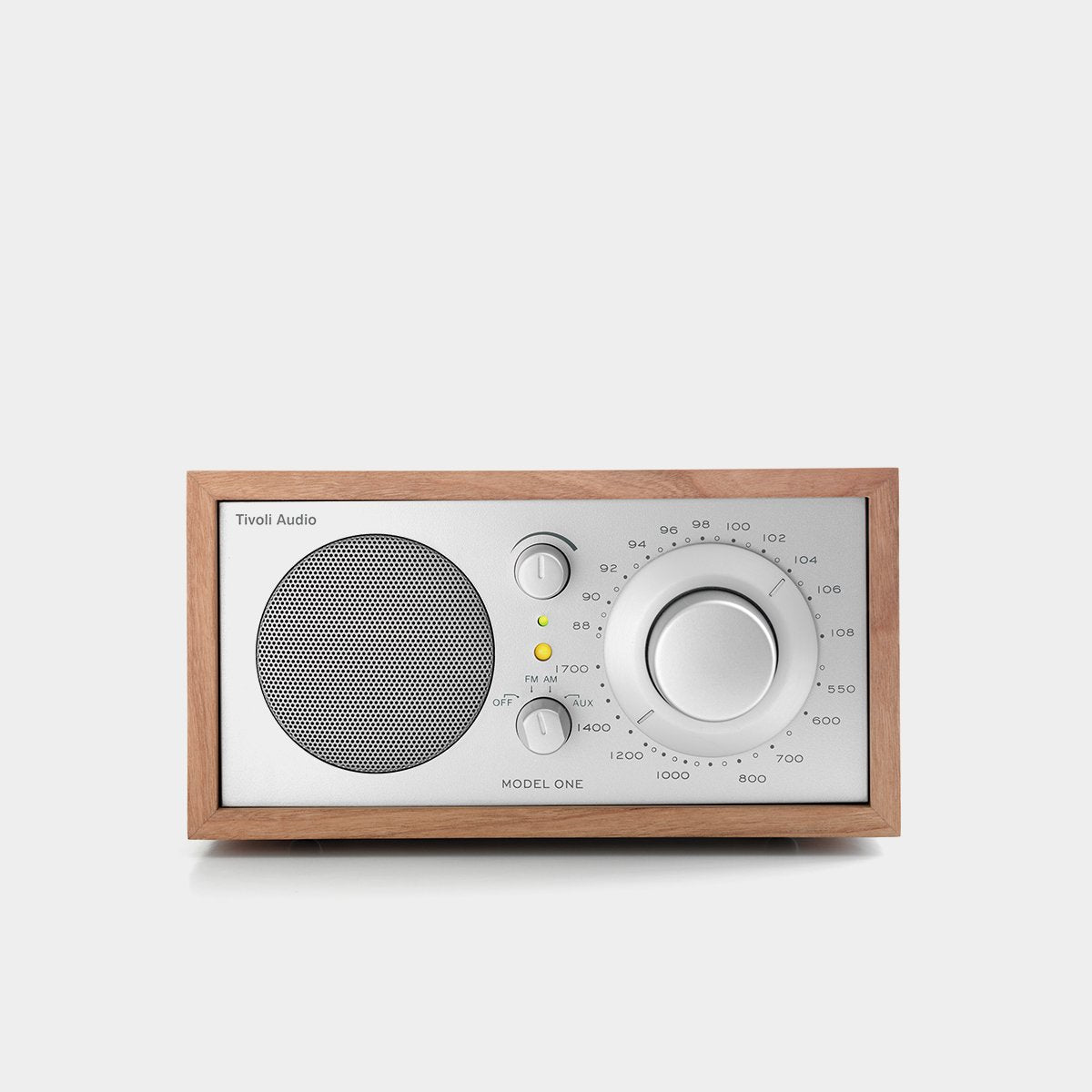
What’s notable about the Model One is how little Tivoli has felt the need to change it. The core cabinet shape, the large analogue tuning dial and the simple bass/treble controls have stayed essentially the same since 2000, even as Bluetooth, DAB+ and digital streaming versions were added alongside it rather than replacing the original. That restraint has kept the Model One relevant across two and a half decades of format changes — AM/FM listeners, Bluetooth streamers and DAB+ households can all buy a version of the same design, rather than the original being quietly discontinued once the technology around it moved on.
Why the Model One still sells
- Reception that actually works. Kloss’s tuner design still outperforms far newer radios in weak-signal or built-up areas.
- A cabinet built to be kept. Solid wood construction ages better, and sounds better, than moulded plastic housings.
- One design, several formats. The same look is available across classic AM/FM, Bluetooth and DAB+ variants.
- A genuine design object. It’s ended up in boutique hotel rooms and a Supreme collaboration without ever changing its core identity.
For a wider look at the brand behind it, our Tivoli Audio design overview covers the rest of the Classic Collection and where the Model One sits within it.
Where to buy the Tivoli Audio Model One in Australia
The Tivoli Audio Model One is available in Australia through BEON, priced from $259 AUD across Walnut/Beige, White/Silver, Black Ash and Cherry/Silver finishes. Shop the Tivoli Audio Model One directly, or browse BEON’s full Tivoli Audio collection for the Bluetooth, PAL and Music System variants.