Ayurveda is recognised as one of the world’s oldest holistic healthcare systems, with roots stretching back more than 5,000 years. Traditionally associated with botanical remedies and whole-of-life wellbeing, its influence is now reaching an unexpected corner of the modern home — the cleaning cupboard — thanks to Australian home care brand Euclove.
By pairing time-honoured Ayurvedic ingredients with one of Australia’s most iconic native botanicals, eucalyptus, Euclove is offering households a genuinely different approach to keeping their homes clean, fresh and low-tox.
Why Shoppers Are Turning to Brands Like Euclove
The shift towards low-tox living is no longer a fringe movement. As more Australians examine what they spray, wipe and mop with every day, conventional cleaning products are facing tougher questions about long-term exposure.
Common ingredients such as ammonia, chlorine bleach, phthalates and synthetic fragrances have come under increasing scrutiny for their potential links to respiratory irritation, skin sensitivities and indoor air pollution. For households with young children, pets or allergy sufferers, these concerns are driving renewed interest in ingredient-led alternatives grounded in botanical functionality — exactly the space Euclove was created to fill.
The Euclove Story: From Family Remedies to Every Room of the Home
Inspired by Ayurvedic traditions and generations of family remedies, Euclove has translated these ancient principles into a modern, plant-based cleaning range designed for every room of the home.
Rather than a single all-purpose spray, the Euclove range covers the full spectrum of household tasks — kitchens, bathrooms, floors, glass, mirrors, stainless steel surfaces and toilets — giving families a low-tox option for virtually every job on the weekly cleaning list.
Inside the Euclove Formula: Eucalyptus, Neem and Clove
At the heart of every Euclove product is a carefully considered blend of three botanical powerhouses.
Australian eucalyptus oil containing 85% cineol forms the backbone of the formulations. Cineol is a naturally occurring compound recognised for its antibacterial and purifying properties, and it delivers the crisp, unmistakably Australian aroma the oil is famous for.
Working alongside it are neem and clove oils, two ingredients long valued within Ayurvedic practice. Neem has been prized for generations for its cleansing and antifungal qualities, while clove oil is recognised for its antimicrobial benefits. Together, this trio allows Euclove to clean, deodorise and support everyday household hygiene — an effective, naturally aromatic alternative to the harsh chemical intensity of conventional cleaners.
Sustainability Is Built Into Every Euclove Bottle
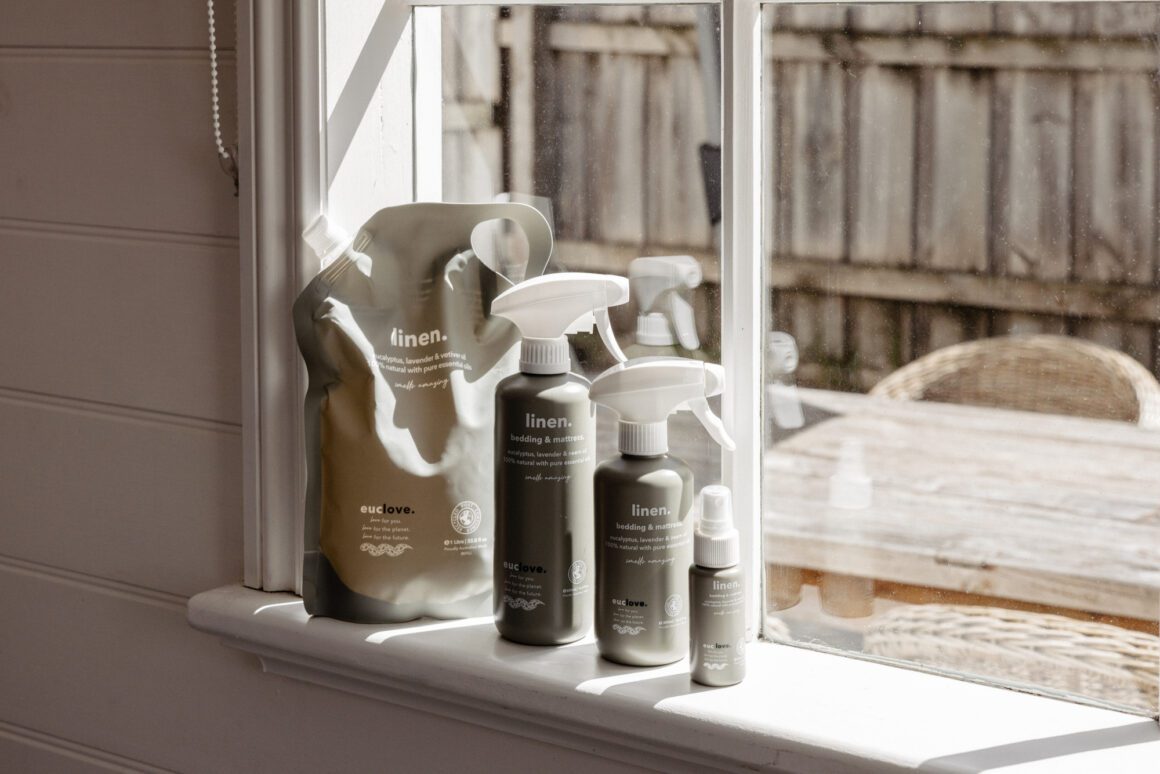
For many consumers, natural cleaning is about more than what goes into the bottle — it’s also about the bottle itself. Reflecting the brand’s broader commitment to conscious living, Euclove bottles are manufactured from 70% recycled plastic, while trigger sprays are intentionally designed without metal springs, a small engineering decision that makes them significantly easier to recycle.
Refill options reduce single-use packaging over time, and reused cardboard packaging further cuts waste across the supply chain. It’s an approach that treats sustainability as a design principle rather than a marketing afterthought.
Euclove’s values extend into the community, too. Through a partnership with The Nurtured Village, the brand provides donations and practical care hampers for mothers and families in need — connecting everyday household purchases to tangible social impact.
Euclove and the Future of Low-Tox Living
The convergence of Ayurvedic wisdom and Australian eucalyptus reflects a wider shift in how households define a clean home. Increasingly, it isn’t just one that looks spotless — it’s one that supports the health of the people living in it and treads more lightly on the planet.
As low-tox living continues to gain momentum across Australia, Euclove demonstrates that the most forward-thinking cleaning solutions can be rooted in ideas that have stood the test of 5,000 years. For households ready to rethink what’s under the sink, the answer may be equal parts ancient tradition and Australian bush.